Conducted remote usability tests with screen sharing to validate designs and identify UX issues.
Amanj
A freelance project management platform designed to solve remote work challenges during the COVID-19 pandemic. Through 8 user interviews and 5 usability tests, Amanj addresses common pain points like delivery delays, unclear communication, and poor task management.
Mobile app Web platform
My responsibilities
Qualitative user interviews conducted via Skype to understand freelancer pain points and workflows.
Project snapshot
Problem & research
The COVID-19 pandemic accelerated the shift to remote freelancing, but freelance designers faced significant challenges: delivery delays, unclear client requirements, trust issues, and poor project transparency.
Research approach: Conducted 8 qualitative interviews via Skype, asking designers about their last project, communication tools, problems with clients, time/cost waste, and their solutions.
Key findings: Clients often don't know what they want, aren't familiar with collaboration tools (Google services), distrust designers and interfere excessively, and there's no transparency in task approval or project progress. Designers waste time on unclear contracts and lack proper time management tools.
Sketches
Because this was a short project, simple sketches were used to convey ideas quickly. Click thumbnails to view larger images.
Design process
User interviews via Skype to discover needs and pain points in freelance project management.
Affinity mapping to categorize findings and identify patterns across user interviews.
Created user persona (Amirhosein Amiri, 24, graphic designer + CS student) to guide decisions.
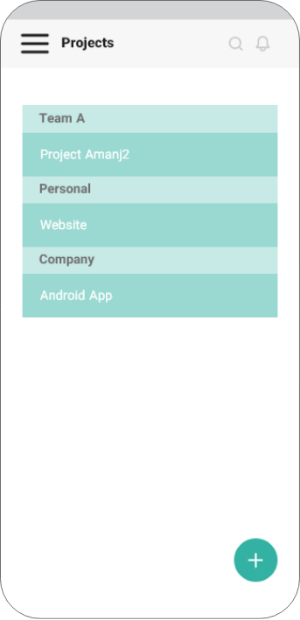
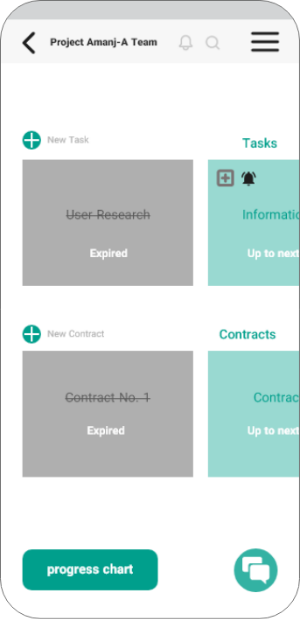
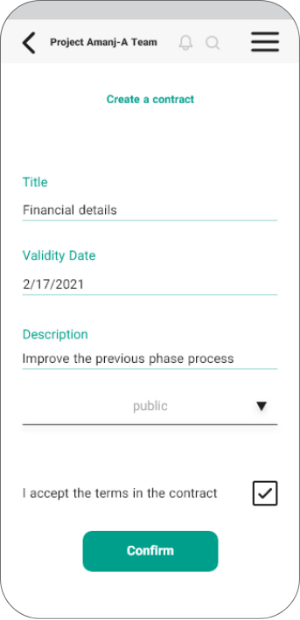
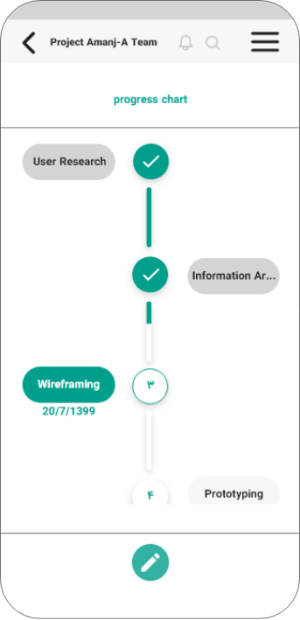
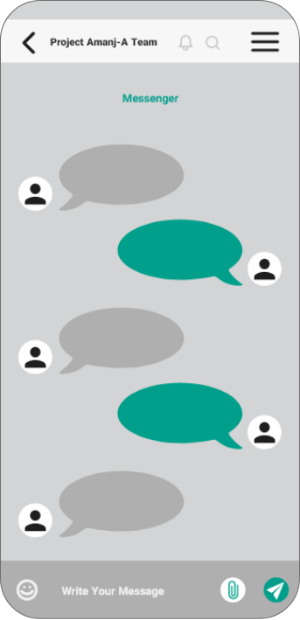
Prioritized needs and defined core features: projects, tasks, contracts, messenger, progress tracking.
Created wireframes, user flows, and high-fidelity screens with full graphic details.
Usability testing with 5 participants, followed by iterative refinement based on feedback.
Key features
Usability testing
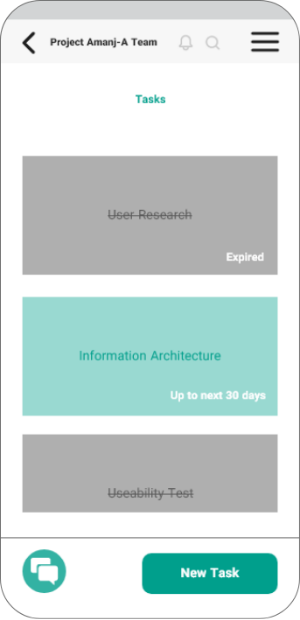
Tested core scenarios: creating tasks, checking task details, making contracts, finding chat/progress chart, and locating previously created items. Identified issues with button clarity, return button placement, and semantic grouping.
High-priority issues fixed: Improved button clarity for task creation and contract making. Reorganized information architecture where buttons next to each other created confusion.
Medium-priority issues: Enhanced return button visibility and repositioned progress chart button to reduce misleading placement.
Positive feedback: Users confirmed the app solved problems well despite simplicity. Navigation was easy, icons guided users to primary targets, and the flow allowed quick access to essential sections from anywhere.
Impact & outcomes
Learnings
Key learnings: Simplicity combined with a comprehensive feature set is achievable. UI clarity is critical, especially for buttons and navigation elements. Information architecture and semantic relationships between elements significantly improve usability. Regular user feedback drives effective iterative improvements.
Future suggestions:
- Formal in-app contracts that can be legally prosecuted
- Group and private video calls and enhanced chat capabilities
- Integration with design/project tools like Zeplin and Jira as plugins
- Smartwatch platform for task reminders and quick checking
- AI-powered intelligent deadline suggestions based on historical data
- In-app payment system for periodic or one-time payments
The expansion of features requires more time, research, and a better understanding of users' evolving needs in the remote freelance landscape.